Harvard Business School Wilder House

December 22nd, 2016

LLB Architects has worked with Harvard Business School for several years on the renovation and upgrades to some of the School’s buildings. In the Fall of 2013, LLB was asked to study, evaluate and assess the historic Wilder House in order to make the building ADA compliant in a manner that offered disabled students the same facilities and amenities as the rest of the student body. The project included the renovation of the first floor to include accessible entries, work stations, and conference rooms; interior renovations to the rest of the house included the re-configuration of spaces to accommodate displaced staff from the first floor.

On the exterior, the renovations and restorations focused on simple placemaking gestures. The areas of primary focus included window replacement, re-pointing the brick, and significant restoration to the wood trim details.

Bryant University Physician Assistant Learning Center

December 22nd, 2016

Bryant University sought to establish a School of Health Sciences that would be anchored by its graduate Physician Assistant Degree. The degree is one of the fastest growing majors in the country and Bryant is bringing a rigorous and supportive program to prepare their physician assistant students to meet the needs of the health care system. The degree supplements an already offered Master in Business Administration degree with a concentration in health care. Bryant’s largest academic building, the Unistructure, was selected for an addition to house the program.

LLB Architects designed the space working with Lavallee Brensinger Architects, specialists in healthcare design, to accommodate the program’s unique needs. We worked with the University to generate program overlays within the existing building spaces, creating an inherently sustainable mix of reduced new construction with selective renovation. The public space was designed to capture the great views of the campus while allowing for an abundance of natural light. The classrooms and laboratories are designed to facilitate the successful transition from classroom to physician’s office. The new addition includes both lecture and team-learning style classrooms, a high-fidelity simulation laboratory, and a realistic physical examination laboratory. The transparent facade showcases the bustling activity within the building and includes a grand staircase and a lounge area offset by walls of glass and brick.

Photography by Warren Jagger

Brown University Herbarium

December 22nd, 2016

This renovation for Brown University’s Herbarium relocated it from the basement of Arnold Laboratories — a small space designated as “temporary” in 1987, to the second floor of the Bio-Med Center. The 1,600 sf space is large enough to house the current collection, collections from across the campus, and from various conservation groups in Rhode Island, while maintaining space for future collections. The move restored the Herbarium to a place of active research and digitization of the specimens it houses.

The major design challenge for the Herbarium renovation was combining function with an architectural aesthetic that promotes public connectivity to one of the area’s oldest collections of preserved plant species; and doing so within a restricted budget. The program includes a preparation room for cleaning and disinfecting specimens; sorting and processing room for studying, cataloging and preserving specimens; conditioned collections room for housing relocated plant specimens; and administrative support space.

Working closely with Brown University, LLB was able to arrange the program spaces in a manner that allows
proper sequencing for prepping, studying, and collecting specimens without contamination from the outside environment while also providing visual connectivity to the public. This project is a prime example of LLB Architects’ ability to work closely with clients to provide an integrated design the combines function with architectural aesthetic.

RISD Teaching and Learning in Art & Design

December 21st, 2016

The TLAD program requirements included a space for masters candidates to work both independently and collaboratively with easy access to advising faculty, space for visiting lecturers, and seminar classes.

LLB architects were challenged by the dark, low ceilings, and warren-like existing office space. The successful renovation is rooted in a highly efficient, flexible layout made vibrant by maximizing perceptions of space and borrowed light. The entry/waiting area subtly brands the space and has inviting site lines to offices, conference room, and a collaborative learning space beyond. Right sized faculty and administration offices with glass storefront entries provide their occupants a sense of connection and privacy.

Strategically located gallery wall panels energize passage through the space and partition the multi-function conference room.

Oversized doors allow the conference room to be closed for private meetings and seminar classes or to be opened as an extension of the collaborative learning space.
The collaborative learning space is clear and open with modular lounge furniture, tables and chairs allowing for a broad range of configurations. The space is used for quiet study, small and large group projects, lectures and gatherings.

Furniture was replaced by the client with large custom made tables and stools on casters.

These changes transformed the ground level adapted commercial storefront space to a purpose built studio environment suitable, flexible, and comfortable for its many uses.

RISD Graphic Design Gallery

December 21st, 2016

RISD’s Graphic Design Department was seeking to develop a common, multi-use space that would allow the department to host various shows, events, and gatherings. The first floor of the building that houses the Graphic Design Department provided the location they were looking for. In developing a plan for the floor, the administrative offices were moved to locations that allowed for improved coordination and better temperature control. The gallery space occupies a central location.

The administrative offices make highly efficient use of space. They are partitioned at the back of the larger gallery by a bright yellow wall skewed to be orthagonal with the exterior and making the interior a bit more generous for the occupants. A frame less storefront system give these modest offices a strong connection to the outdoors and community connection.

The GD Gallery plan was reduced to the essentials and it was constructed with honest durable materials. It is designed for work and viewing, not to draw attention to the architecture. Where design elements are required, LLB steered clear of commercial solutions and instead, prepared the space to accept uniquely RISD constructions.

Franklin Public Library Ground Breaking

December 16th, 2016

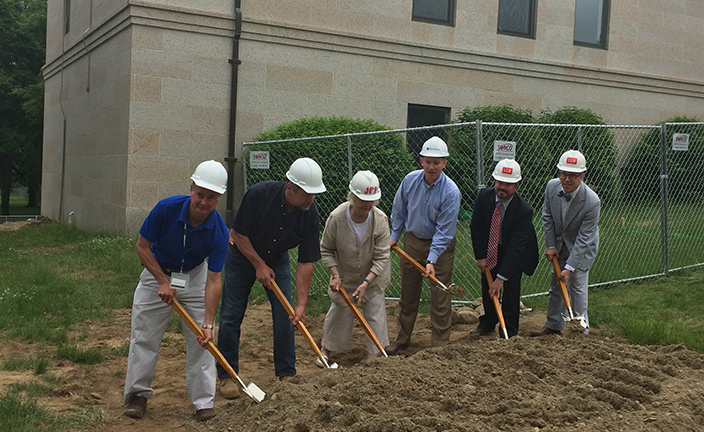
June 3, 2016 – The Franklin Public Library, established in 1790, is widely considered to be the nation’s first public library. The library collection was started with the donation of 116 books from Benjamin Franklin. The current library was built in 1904 and added onto in 1989. Faced with the need to make internal improvements and a shortage of the space needed to accommodate a record number of library visitors resulting from a surge in the Town’s population, the decision was made to move forward with the recommendations of a previously completed study.

LLB Architects, hired to design the historic restoration, renovation, and 6,000 square foot addition to existing 22,000 square foot building, worked closely with the library, town and community to develop a solution that would meet their goals. The project will increase the capacity of the general stacks, provide much needed meeting and community rooms, increase the size of the children’s room, and create a young adult room. Additionally, the building’s heating, air conditioning and sprinkler systems will be updated.

The ground breaking ceremony held today was the celebration of the start of a long anticipated project within the Town of Franklin.franklin-library-ground-breaking

Peter Green House at Brown University

December 16th, 2016

The Peter Green House at Brown University was much more than a simple renovation project. To make way for the University’s “The Walk” Project, the 1890 historic wood-framed house was painstakingly uprooted and moved away from its original foundation. Its strategic relocation to the corner of Brown and Angell Streets maintains the mixed use character of the neighborhood, with residential scale and university buildings side-by-side.

The Peter Green House previously housed the Department of History, and continues to do so in its new location. In addition to full restoration, Brown University sought to upgrade the building significantly, with a new ADA-accessible lower level, a LULA lift to the public spaces, new sprinkler system, new fire alarm system, and improved egress stairs. All but one exterior fire escape have been removed, restoring the building to its original character.

Video: Peter Green House Move >>

Community Preparatory School Breaks Ground

October 13th, 2016

June 10th, 2016

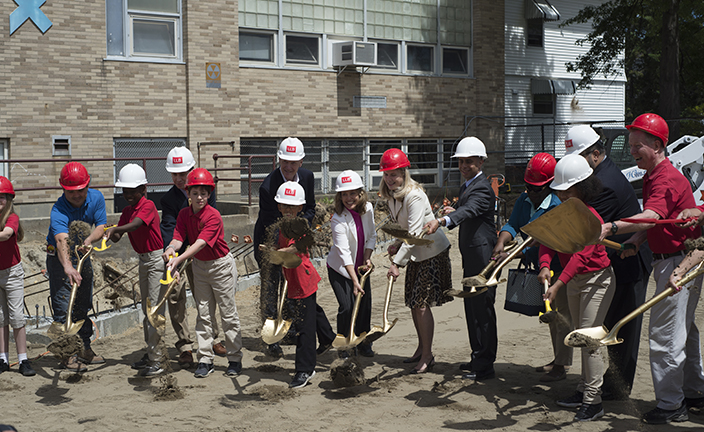
A groundbreaking for an addition to the Community Preparatory School in Providence, Rhode Island was held today. The new 4,500 sf building addition and campus expansion will provide the school with much needed administrative offices and student workspace. Kathy Bartels, Patrick Torborg, and Bethany Burns joined the students, faculty, alumni and friends of the school for the event.

16-0610-community-prep-groundbreaking

The Design Exchange Wins a 2015 Grow Smart RI Award

May 29th, 2015

LLB3401exterior

Grow Smart RI is recognizing The Design Exchange with an “Outstanding Smart Growth Projects” award. The distinction was presented at the 2015 Smart Growth Awards at The Ballroom at the ProvidenceG on May 21.

“Each year, passionate, creative, and resourceful Rhode Islanders show us the way to tap our state’s full potential through projects, plans, and policies that play to Rhode Island’s strengths and generate enduring economic benefits—both statewide and in specific neighborhoods,” stated Grow Smart RI’s executive director Scott Wolf about the celebration, now in its fourth year.

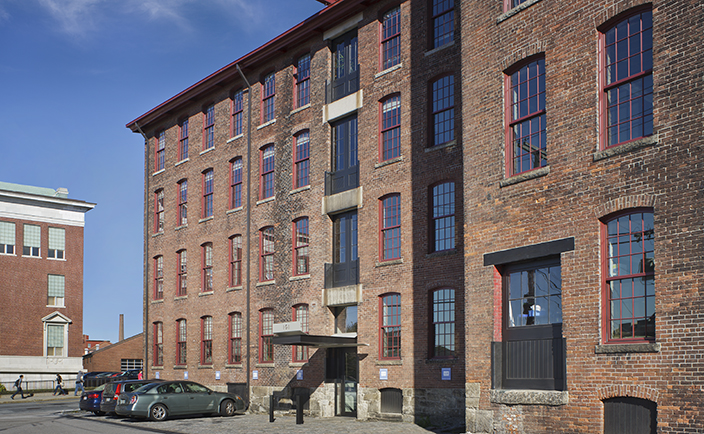
The Design Exchange—a new collaborative work community in downtown Pawtucket—is located in a historic, four-story mill that was once part of the Rhode Island Cardboard Company complex. Constructed in 1880, the restored building is now occupied by eight creative businesses including graphic, industrial, and interior designers, photographers, textile designers, and engineers—vibrancy that has been drawing visitors and economic activity to Pawtucket’s arts district.

Lerner Ladds Bartels (LLB) Architects, which also operates out of The Design Exchange, purchased the building in 2010. “At the time, we had been searching for a building space to own for about ten years,” explained LLB Architects principal Kathleen Bartels, who indicated that the company’s previous space—a Victorian home in Eastside Providence—didn’t quite lend itself well to collaboration. “We were looking for an open floor plan.”

Bartels and her Partner Chris Ladds developed and renovated the historic mill, which previously sat vacant for over 30 years. “We spent a lot of time getting the economic model to work and ensuring that it was a smart investment,” stated Bartels, who added that state and historical tax credits significantly contributed to the project’s economic feasibility.

“There was a lot of collaboration to get the project financed,” she continued. “The building’s previous owner had secured and sold us the rights to the tax credits, which we used for rehab work. We also worked with Pawtucket Business Development Corporation and Bank RI to bridge the remaining gap in funding.”

The Design Exchange, a live/work community, was a vision that was dreamt by the building’s previous owner, according to Bartels. “We wanted businesses with artistic and creative focuses.”

Bartels, a Coventry native, mentioned that The Design Exchange shares a similar mission and philosophy with Grow Smart RI. “While it is challenging, it is very rewarding to fix the broken environment and transform communities into great places to live and work.” She also indicates that smart growth is a concept that is close to the architectural philosophy of her firm. “It’s all about repurposing, adaptive reuse, and being economical with the land and our historic buildings.”

Established in 1998, Grow Smart RI has become the leading advocate for sustainable economic growth, revitalization, and improved quality of place in the state’s urban, suburban, and rural communities.

“It’s very important to take a look at the building stock in Rhode Island,” added Bartels. “Rhode Island’s buildings are some of our state’s most unique and precious assets, and we need to preserve and capitalize on these strengths as much as possible.”

The Design Exchange’s nomination to receive the recognition was submitted by the Pawtucket Foundation, recipient of this year’s “Outstanding Smart Growth Leaders” award.

View Grow Smart RI’s celebration of the Design Exchange here.


URI Gender & Sexuality Center Celebrates Opening of Historic Building

May 11th, 2015

drayton_kathy

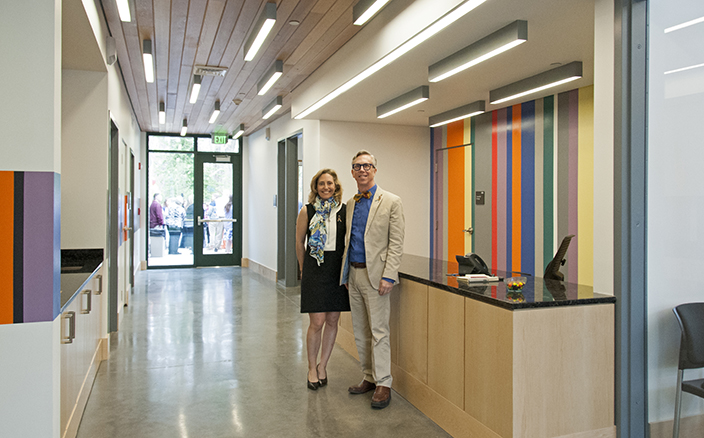
May 11, 2015 – The Country’s first free-standing campus center dedicated to the LGBTQ community celebrated its Grand Opening last week at the University of Rhode Island. The new Gender and Sexuality Center serves as a testimony to LLB Architects’ and the University’s commitment to diversity by providing support for the LGBTQ community and its straight allies.

Drayton Fair, Principal at LLB Architects, states “The design of the G&SC at URI is inspired by themes found in history and daily LGBTQ life. The stone facade on one volume of the building represents the strength and permanence of diversity while recognizing the 1968 Stonewall Riot in Greenwich Village. The pergola over the front entrance is representative of how often the community has had to be hidden. As a celebration of acceptance, the pergola is now a safe and open presence welcoming visitors to the Center.”

University of Rhode Island President, David M. Dooley said in a statement at the Ribbon Cutting, “This new facility is a tangible way for current and new students, faculty and staff to know that our transformational goals are far more than words on paper.”  Annie Russell, Director of the Gender and Sexuality Center, said “We will also become a standard bearer for institutions across the country, to showcase the future possibilities for centers like ours.”

Pic: Kathy Bartels and Drayton Fair at the May 6th Opening of the URI Gender and Sexuality Center