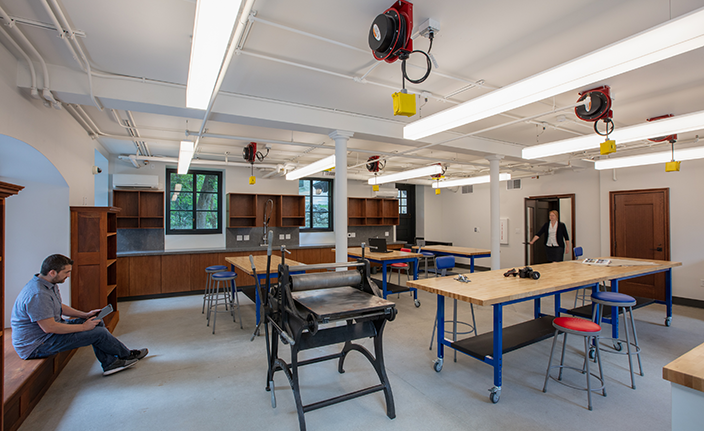
In design as in all business today, collaboration is both means and end.
Over the course of my two-decade-plus career, I have witnessed firsthand the shift from hierarchical, top-down organizations to dynamic, collaborative organisms. As an architect and business owner, I am on both sides – striving to create a workplace where creativity can thrive and helping clients do the same.
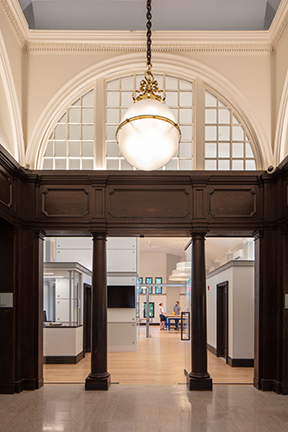
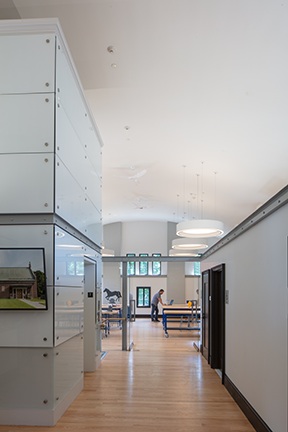
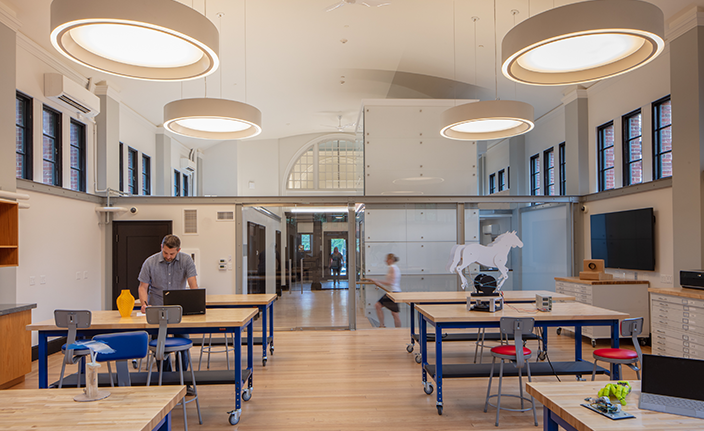
LLB Architects, in collaboration with Charles Rose Architects, completed several projects for Beam Therapeutics, located in Cambridge’s Innovation District. The first project was the design and construction of a 38,000 sf multi-story CRISPR science laboratory and workspace. LLB Architects assumed the role of laboratory architect for this design and created custom solutions for 3 large-scale research and development laboratories dispersed throughout the multi-story space.
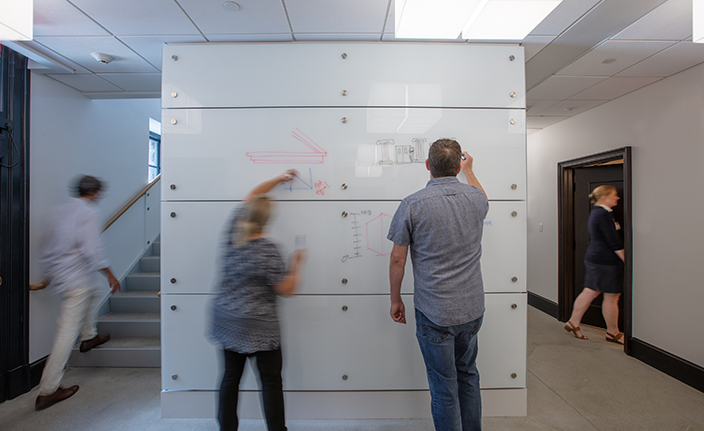
Beam Therapeutics, known for its pioneering precision DNA editing, desired a flexible micro-biology and chemistry laboratory space designed around over 100 new pieces of highly specialized, gene-editing equipment and robotics. The design solution relied on transparent materials to allow visual access from the street and to maximize the integration of natural light. The design arranged laboratories and workspaces in a fashion that promoted chance interaction, fostering the company’s desired culture of collaboration. The laboratories included tissue culture rooms, fume hood alcoves, and cold room design, which provided a home for this breakthrough company to, in their own words, “…treat disease, one letter at a time.”
Photographs 1-8 by Neil Alexander. Final photo provided courtesy of New England Lab.
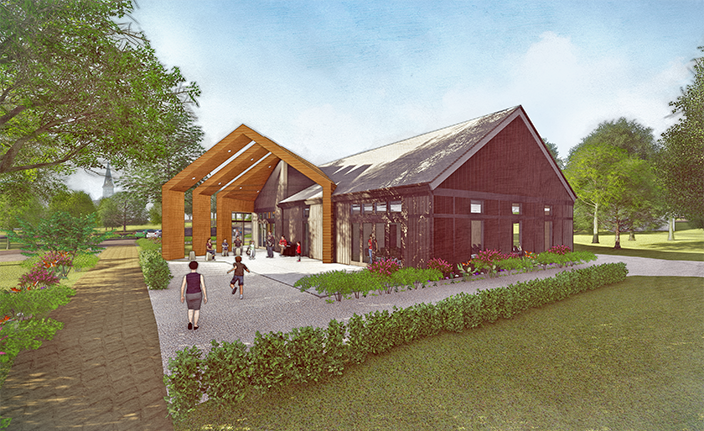
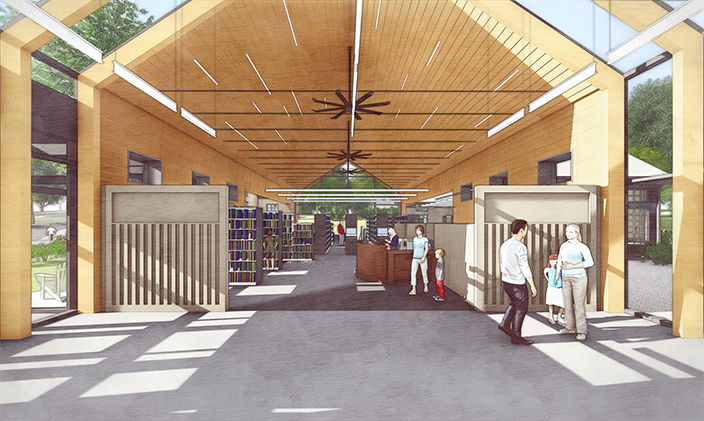
LLB Architects was asked to help the Town of Chester envision a new library to be located in a revitalized town park and assist the town in its application for a state grant for initial funding. The efficient plan preserves the service intimacy that is so well known in town and provides the space required for a modern library, all within a building that respects the scale and traditions of the town. LLB worked closely with the North Quarter Park landscape architect to define the potential building area and maximize the multiple uses of the site for the library as well as active and passive outdoor recreation.
The final concept design has two orientations, reflective of the building’s dual role on the site. A more formal, traditional façade addresses Main Street, while a more whimsical architecture connects to the landscape and Trolley Line Trail. New traffic patterns and plenty of accessible parking were also added to the site. The project successfully received a $1M CT library grant.
LLB Architects was recognized at the annual AIA Rhode Island Design Awards on Thursday, December 6 with a prestigious Honor Award for its design of Lincoln School’s STEAM Hub for Girls. Completed in May 2018 by Shawmut Design and Construction, the addition and renovation project provides interdisciplinary teaching and learning spaces, as well as an art gallery for students and visiting artists. STEAM stands for Science, Technology, Engineering, Art &Architecture, and Mathematics.
“This addition takes an existing under-developed façade and provides an aesthetic terminus to Blackstone Boulevard while creating a progressive image for Lincoln School.”
Commented one member of the AIA Review Jury
The project transformed existing traditional science classrooms into flexible spaces for group collaboration and project-based learning, while making the facilities more sustainable and resilient. An AIA Juror commented that “the interior renovation of the existing building is programmatically exciting and colorful;the utilitarian spaces allow for multiple functions and a dynamic interdependence of uses occurs in a limited square footage.”
Principal Kathleen Bartels, AIA, noted, “It’s a bold, tectonically expressive design that shows girls learning and leading in STEAM fields. It’s a timely and important message that Lincoln School, as a leader in girls’ education, wanted to make.We were honored to partner with Lincoln on this truly collaborative project.”
The design of the addition is a visual expression of the school’s mantra ‘where tradition meets innovation.’ The façade features a dramatic glass curtainwall facing the west and 20 vertical fins, or sun shades, spaced in such a way as to create rolling shade as the sun moves.
Principal Christian Ladds, AIA, added, “The curvilinear glass design allows people outside to look through the new addition and see the adjacent historic building.That juxtaposition was a key element of the design.”
Posted in Uncategorized | Comments Off on LLB Architects Receives AIA Rhode Island Design Award for Lincoln School STEAM Hub
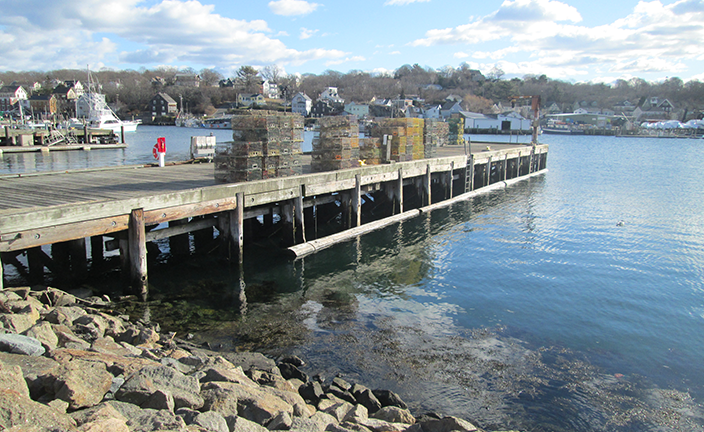
In early 2018, LLB Architects and their team of architectural, mechanical, electrical, plumbing, and cost estimating consultants, conducted a facilities conditions assessment of the Jodrey State Pier; a facility managed by the Massachusetts Economic Development & Finance Agency (MassDevelopment). The Facilities Condition Assessment survey documents the conditions of wharf and pier infrastructure, and buildings located at 1 and 3 State Fish Pier. The primary goal of the study was to inform MassDevelopment of the financial building asset protection needs centering around life cycle and deferred maintenance. The effort resulted in a 10+ year capital planning outlook based on the facility’s current physical state and usage.
The report generated from the assessment describes the study’s methodology, assumptions, and exclusions, to inform the criteria for future analysis and decision-making.
It included digital, tabular, and photographic information, as well as additional analysis as was needed.
LLB Architects worked with the Putnam Facilities Study Group, Putnam Commission on Aging and the Putnam Recreation Department on a Feasibility Study to renovate and expand the existing Putnam Armory into a multi-use building. The existing 13,300 square foot building was built in 1955 for the National Guard Bureau. The Town of Putnam acquired the building in the hopes of building a shared Senior Center and Recreation Facility.
The layout contains a 5,600 square foot gym in the center of the building, surrounded with program spaces. The gym will remain and serve the Senior Center during the day for multiple functions (such as dining and exercise) as well as house basketball games in the evening. The renovations would have increased the building to roughly 14,000 square foot with the addition of a new entrance and Senior Living Room. The building’s utilities would be brought up to current code compliance and all space will be handicapped accessible.
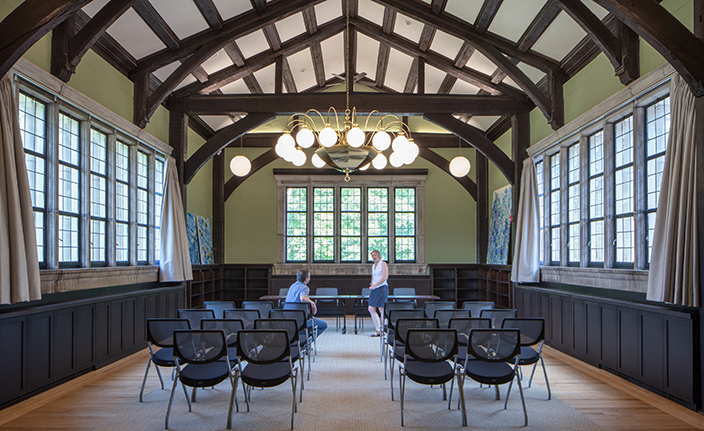
In 2016, the Town of Weston voted to allocate design funds to renovate the Old Library to create an Art & Innovation Center. The Center is a branch of the Weston Public Library and provides hands-on learning opportunities related to art and technology for citizens of all ages. In addition, the Weston Media Center, a nonprofit independent cable TV station and media hub, is located in the new facility.
LLB began working with the town in January 2017, and worked with the WAIC building committee to identify program requirements based on the needs of the town. While understanding the constraints of the existing historic building, the team moved forward to provide an effective layout and design. LLB met with various boards to ensure the historic nature and the new use of the building was carefully balanced. At a November 2017 Town Meeting, the citizens overwhelmingly moved for the project to proceed into construction. The renovation of this historic building was completed in the the summer of 2019.
Photographs by Neil Alexander
Posted in Community, Projects | Comments Off on Weston Arts and Innovation Center
In July 2018, LLB Architects opened a new office in the historic Stevens Building, located at 40 Southbridge Street, in the heart of downtown Worcester, Massachusetts. LLB worked closely with the City of Worcester’s Business and Community Development Division to select a location embedded in the city center. LLB chose a building similar in character to its Pawtucket office, an industrial 19th-century brick building converted to modern professional office space.
LLB selected Worcester as the location for its new Massachusetts office based on the growing development activity within the City and surrounding areas. The firm is excited to be part of a community that values revitalizing historic buildings and improving urban environments, as it aligns with the firm’s work in adaptive re-use along with new construction that respects historic neighborhoods.
Worcester’s concentration of municipal, institutional, educational, and commercial clients offers many opportunities for LLB to contribute to the growth of the area. The firm also plans to contribute to the revitalization of Worcester through the development of a building similar to its Design Exchange headquarters in Pawtucket, RI. Currently, LLB is working with the Worcester Public Library. It served as the Project Architect of the recently completed Fidelity Bank Worcester Ice Center.
The history of LLB Architects is rich and varied since its founding in 1936 in Providence, Rhode Island as an engineering practice by Samuel Lerner, a structural engineer and professor at Brown University. In 2011, the firm moved to the Design Exchange in Pawtucket, a historic mill building which was purchased and developed by partners Christian J. Ladds and Kathleen A. Bartels. The firm currently has 10 registered architects and half of the employees are LEED accredited professionals. Serving clients in the municipal, institutional, educational, and commercial markets within New England, the firm focuses on designing buildings with sustainable practice and environmental consciousness; contributing to the contextual fabric of a place and creating a positive impact on the surrounding community.
The above photograph is of the Stevens Building, built in the mid-19th century, from its listing on National Register of Historic Places in 1980.
Posted in Uncategorized | Comments Off on LLB Opens Worcester Office
The Franklin Public Library, established in 1790, is widely considered to be the nation’s first public library. The library collection was started with the donation of 116 books by Benjamin Franklin.
The original library was built in 1904 and expanded in 1989. LLB Architects designed the 6,000 sf addition, restored and renovated the existing 22,000 sf structure. LLB worked closely with the library, town and community to develop a solution that would meet their goals. The addition increases the capacity of the general stacks, provides much needed meeting and community rooms, enlarges the size of the children’s room, and creates a young adult room. It also updates the entire building’s heating, ventilation, and air conditioning systems, and inserts a complete new sprinkler system.
During the course of construction, the town added to the scope of the project by committing to additional extensive renovations and upgrades to the original building, tel/data systems, and original roof, resulting in significant, but value added, Change Orders.
The renovation included the preservation of Memorial Hall, which contains the faux bronze plaque commemorating the dedication in 1904, the restoration of the original reading room with its priceless murals, and adds a custom designed climate controlled exhibition case for the original books donated by Benjamin Franklin.
Posted in Community, Projects | Comments Off on Franklin Public Library
Thank you for visiting LLB Architect’s website to learn how to use your scale! Below are some directions which can help you get oriented if you have not used an architectural scale before.
How to Use an Architectural Scale:
Determine the scale used on the architectural drawing which you wish to review. If one scale has been used for an entire sheet of the places, the scale will typically be found in the legend. If different scales have been used for different drawings, check underneath the individual drawings for a scale.
Find the corresponding scale on your ruler. On the LLB scale you will find a 1/8 at one edge and 1/4 at the other end. The row of numbers which starts with zero closer to the end with 1/8 are the numbers that correspond to that scale, with 1/8 corresponding to 1 foot.
If you wish to measure out a 4-foot wall at a particular scale, simply begin measuring at 0 and go to the 4 mark on that scale.
If you look to the outer edge of the scale, you will see smaller gradations on the far side of zero. These fractions of an inch allow you to measure fractions of a foot. If you want to measure 4.5 feet on your drawing, begin at the halfway point of the smaller gradations (on the outer edge of 0) and continue until you reach the 4 mark.